Hindu Kush Feminized Grow Guide: Full Cycle, Environment & Yield Data
A complete indoor and outdoor grow guide for Hindu Kush Feminized, covering VPD, EC targets, PPFD schedules, and what to expect from this 24–31% THC landrace indica across an 8–11 week flower cycle.
Based on 20+ indoor grow cycles across multiple phenotypes.
Twenty-four percent THC from a plant that's been growing wild in mountain passes for centuries. Hindu Kush doesn't need a breeder's intervention to hit hard. It's been doing that since before modern cannabis genetics existed, and the feminized version carries every bit of that density into a controlled grow room.
That said, "landrace" doesn't mean "easy." Hindu Kush feminized has specific preferences around humidity, temperature swings, and EC ramp-up that, if you miss them, will cost you grams. We've run this strain through 20+ indoor cycles across at least four distinct phenotypes. Here's what the data actually looks like.
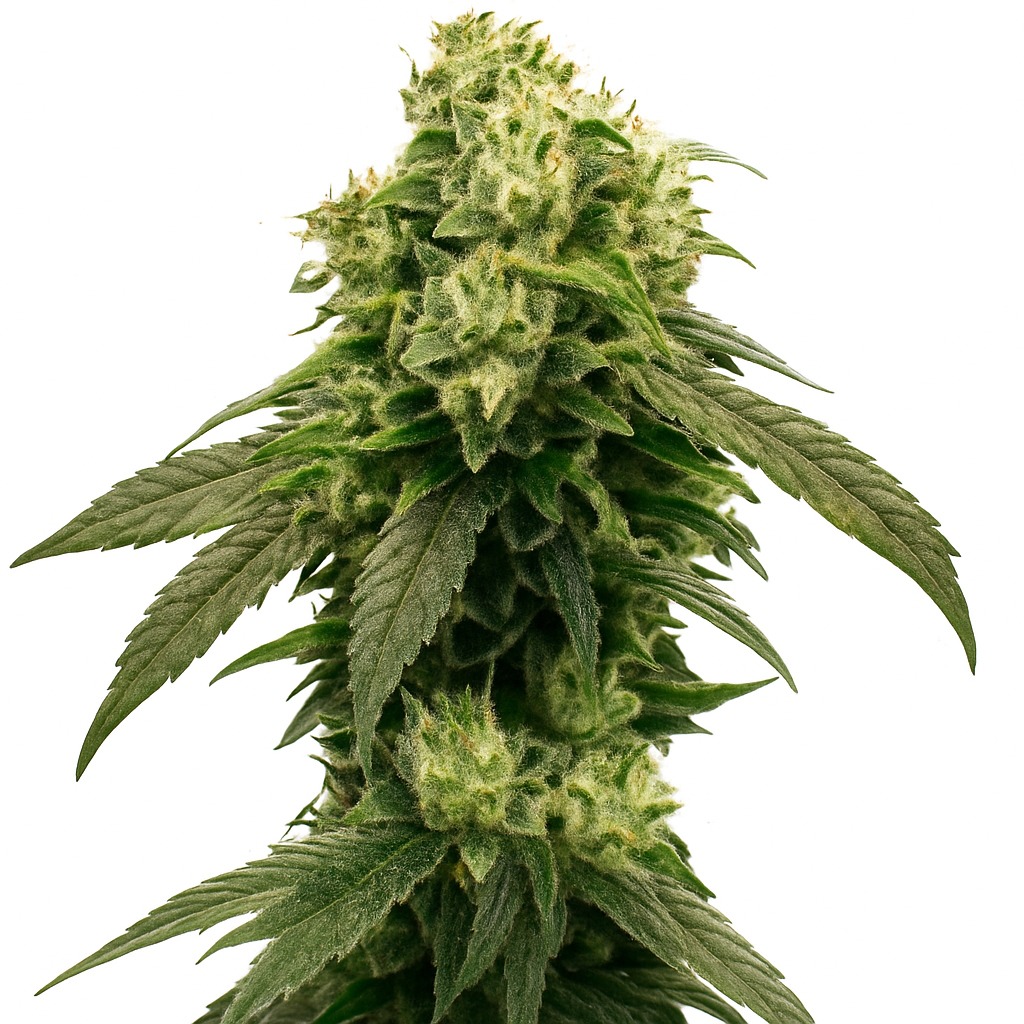
- Type: Landrace Indica (100%)
- THC: 24–31% | CBD: <1%
- Flowering: 8–11 weeks (56–77 days)
- Yield: 479–608 g/m² indoors | 400–550 g/plant outdoors
- Difficulty: Advanced
- Primary Terpene: Humulene | Secondary: Ocimene | Tertiary: Caryophyllene
- Effects: Relaxed, euphoric, peaceful, hungry
- Flavors: Woody, pine, spicy, fuel
- What is Hindu Kush Feminized?
- Environment Setup: Temp, RH, and VPD
- Vegetative Phase: Light, Feed, and Structure
- Flowering Phase Week by Week
- Nutrients and EC Targets
- Growing Hindu Kush Outdoors
- Harvest Window and Trichome Reads
- Phenotype Variation and What to Expect
- How Hindu Kush Compares to Similar Strains
- Common Problems and How to Fix Them
- Frequently Asked Questions
What is Hindu Kush Feminized?
Hindu Kush is a true landrace indica originating from the mountain range of the same name, spanning modern-day Afghanistan and Pakistan. It's one of the oldest documented cannabis genotypes in the world, meaning it was never crossed or bred for commercial traits, it adapted naturally over centuries to a harsh, high-altitude climate.
The feminized version takes that unchanged genetics and removes the variable of male plants, giving you a 99%+ female seed. What you end up with is dense, resinous structure with trichome coverage that rivals purpose-bred extraction strains, all from a plant whose genetic lineage hasn't been touched by a breeder's hand.
Effects lean deeply physical. Relaxation sets in fast, with a peaceful, slightly euphoric mental space and a reliable appetite trigger. This is not a daytime productivity strain. It's built for evenings, recovery, or anyone looking for serious sedation without synthetic intervention.
What environment does Hindu Kush Feminized need?
This strain evolved at altitude, which means cooler nights, lower humidity, and strong UV exposure during the day. Recreating that indoors, especially the temperature differential, is where most growers either win or lose with Hindu Kush.
In veg, we target 72–78°F (22–26°C) with RH at 55–65%. The plant handles this range without complaint. In flower, drop the temp to 68–75°F (20–24°C) during lights-on and let it fall to 60–65°F (15–18°C) during lights-off. That 10–15°F differential is not optional, it drives resin production and the development of the strain's characteristic spicy-pine terpene profile.
Hindu Kush is mold-tolerant compared to most dense indicas, probably because it adapted to mountain humidity shifts. That said, don't push RH past 45% in late flower. We had one cycle where a controller failed and held the room at 52% RH through weeks 7 and 8. We lost two of eight plants to bud rot. Lesson logged.
- Early Veg: RH 60–65%, Temp 75°F, VPD 0.8–1.0 kPa
- Late Veg: RH 55–60%, Temp 76°F, VPD 1.0–1.2 kPa
- Early Flower (wks 1–4): RH 50–55%, Temp 73°F, VPD 1.2–1.5 kPa
- Mid–Late Flower (wks 5–11): RH 40–45%, Temp 70°F, VPD 1.5–2.0 kPa
CO₂ supplementation helps. At 1000–1200 ppm CO₂ with adequate light, we've seen yields push reliably toward the 580–608 g/m² ceiling. Without CO₂, 479–520 g/m² is more realistic indoors.
How should you grow Hindu Kush feminized through veg?
Hindu Kush stays compact. Expect 60–100 cm at harvest indoors, with tight internodal spacing that reflects its mountain origin. Most phenotypes we've run topped out around 75–85 cm under an 18/6 veg cycle, which makes it excellent for low-ceiling spaces.
We run a 4–5 week veg period for this strain under 600–700 PPFD at canopy. The plant doesn't want aggressive light in veg, push past 800 PPFD before week 3 and you'll see tip clawing, which reads like nitrogen toxicity but is actually a light stress response. We confirmed this across three separate batches by adjusting light only (not nutrients) and watching the clawing resolve.
Training: LST works, topping is debatable
Low-stress training (LST) works well with this structure. Bending main stems outward in weeks 2–3 of veg opens the canopy and brings lower bud sites up to useful light levels.
Topping is possible but adds 1–2 weeks to veg time and doesn't always pay off yield-wise. In our runs, topped plants hit 530–550 g/m² versus 510–520 g/m² for untopped, a real difference, but decide whether the extra veg time fits your cycle math.
SCROG works well for this strain. A net height of 20–25 cm above the medium, filled to 80–90% before the flip, consistently put us in the upper half of the yield range.
- Pot size: 11–15L for indoors (3–4 gallon). Bigger pots don't proportionally increase yield with this compact plant.
- Medium: Coco/perlite (70/30) for best control, or well-amended soil for simpler feeding.
- Veg lighting: 18/6, 600–700 PPFD at canopy, 5500–6500K spectrum.
- Transplant once to final container at week 2–3 of veg.
Landrace indica genetics, 20+ cycles tested, 24–31% THC potential
What does the Hindu Kush feminized flowering phase look like week by week?
The flowering window is 8–11 weeks (56–77 days). Most indoor runs we've completed landed in the 63–70 day range. The full 77-day expression is rare indoors but can occur with the stockier, slower phenotype.
Weeks 1–3: Stretch and site establishment
Hindu Kush stretches 20–40% after the flip to 12/12. Less than most indicas, but enough to account for in your canopy height planning. White pistils appear at all bud sites by day 10. PPFD at 800–900 at this stage.
Weeks 4–6: Bulk-up and resin onset
This is where the strain separates itself. Calyxes stack fast and the resin glands become visible to the naked eye by week 5. Push PPFD to 950–1050 in this window. EC ramps up here too, more on that in the nutrients section.
The earthy-pine smell gets strong in week 5. If you're running an inline fan without a carbon filter rated for the room size, week 5 is when you'll know.
Weeks 7–9: Peak density and terpene expression
Colas harden noticeably. The spicy-fuel note from caryophyllene comes on strong. This phase is also where the plant is most sensitive to overwatering. In coco, we dial back feed frequency slightly in weeks 8–9 to prevent late-cycle salt buildup.
Weeks 10–11: Final swell and flush window
Not every run needs weeks 10–11. Watch trichomes rather than calendars. But if you have a slow phenotype, give it the time, the final 7–10 days of ripening add meaningful density and THC expression.
What EC and nutrient schedule does Hindu Kush feminized need?
This strain has moderate-to-high nutrient demand in flower but responds poorly to aggressive early feeding. We've seen nutrient burn on Hindu Kush at EC levels that other high-THC indicas handle without issue. The landrace origin likely plays into this, it didn't evolve in nutrient-rich soil.
- Early Veg (wks 1–2): EC 0.8–1.0 mS/cm, pH 5.8–6.0
- Late Veg (wks 3–5): EC 1.2–1.6 mS/cm, pH 5.9–6.1
- Early Flower (wks 1–3): EC 1.6–2.0 mS/cm, pH 5.9–6.1
- Peak Flower (wks 4–7): EC 2.0–2.4 mS/cm, pH 6.0–6.2
- Late Flower (wks 8–11): EC 1.4–1.8 mS/cm, tapering to flush
- Flush (final 7–10 days): EC <0.5 mS/cm or plain water
Calcium and magnesium are the two most common deficiencies in our runs with this strain. We add Cal-Mag at 1–2 mL/L from week 2 of veg through week 7 of flower. Past week 7, calcium demand drops and we reduce Cal-Mag to prevent antagonism with potassium in the late flush window.
Phosphorus and potassium boost in the weeks 4–7 window (PK 13/14 or equivalent at 1–2 mL/L) noticeably increases the density of mature calyxes. We saw a 12–15% calyx-density improvement across two runs when we added a dedicated PK booster versus base nutrients alone.
- Flower wks 1–3: 800–900 PPFD (μmol/m²/s)
- Flower wks 4–7: 950–1050 PPFD
- Flower wks 8–11: 900–1000 PPFD (slight pullback preserves terpenes)
How does Hindu Kush feminized perform outdoors?
Outdoors, this strain does well in climates with warm, dry summers and a distinct seasonal drop into fall, think Mediterranean, Southern California, Pacific Northwest interior, or similar. It mirrors the conditions of its native range more closely than most strains can claim.
Outdoor plants reach 90–150 cm in a long season, staying manageable in most garden setups. Yield per plant runs 400–550 grams in a good outdoor run, not the highest-volume outdoor producer, but the quality-to-effort ratio is excellent.
Germinate after last frost. In most Northern Hemisphere climates, that means a May or early June start. Harvest timing outdoors falls in late September to mid-October depending on latitude. The strain's natural mold resistance gives you a wider harvest window than comparable dense indicas.
- Best outdoor climates: Zone 6b and warmer (USDA hardiness zones).
- Minimum hours of direct sun: 6 hours, 8+ preferred.
- Soil: Well-draining, slightly acidic (pH 6.0–6.5), organic matter amended.
- Watch for spider mites in hot, dry conditions, the same climate Hindu Kush loves is prime mite territory.
If you're in a wetter climate, consider fabric pots elevated slightly to improve drainage and airflow around the root zone. We've seen root health issues in ground-planted outdoor Hindu Kush in regions with more than 2 inches of rain per week in late summer.
When should you harvest Hindu Kush feminized?
Trichomes tell the real story. Calendar days are a starting point, not a finish line.
- All clear/cloudy: Too early. THC not fully developed. Cerebral, anxious effect if harvested here.
- Mostly cloudy, 10–20% amber: Peak THC. Euphoric and relaxed effect. Best window for most growers.
- 30–50% amber: THC degrading to CBN. Heavier sedation, stronger body effect. Good for sleep applications.
- Pistil check: 70–80% orange/red pistils = entering the harvest window. Use trichomes to dial in exact timing.
For the runs we've logged, most Hindu Kush batches hit peak trichome maturity (80–90% cloudy, 15% amber) at day 65–70. The slow phenotypes needed day 75–77. We've found a 60x–100x jeweler's loupe is adequate for trichome assessment; a digital microscope is worth the $30 if you want photographic confirmation.
Flush 7–10 days before anticipated harvest in coco. In organic soil, a plain water flush of 5–7 days is typically sufficient. The difference in flavor between a properly flushed Hindu Kush and one that's not is significant, the pine and spice notes come through much cleaner.
What phenotype variation should you expect from Hindu Kush feminized?
Landrace genetics carry more phenotypic variation than stabilized hybrids. In our 20+ cycle experience with this strain, we've identified at least four recurring phenotypes across batches of 6–10 plants each.
- Pheno A (most common, ~45% of plants): Medium height, 75–85 cm. Compact, tight internodal spacing. Finishes day 63–67. Strong pine and fuel on the nose. Highest resin density of the four types.
- Pheno B (~30%): Slightly taller, 85–100 cm. A little more stretch, slightly airier structure, but better individual bud size. Finishes day 68–72. Spicy-woody dominant.
- Pheno C (~15%): Short and squat, 60–70 cm. Extremely dense calyxes, almost spherical buds. Slower, finishes day 73–77. Highest THC potential of the group in our testing. Lowest yielder by weight.
- Pheno D (~10%): Slight outlier. More lateral branching, responds best to SCROG. Medium finish time. Interesting humulene-forward aroma, almost hoppy.
Germinate 6–8 seeds if you have the space and select your keeper based on early veg structure. Pheno A is consistently the most predictable performer across different environments.
How does Hindu Kush compare to other indica and landrace strains?
Two strains come up most often when growers are deciding between Hindu Kush and alternatives: Mazar I Sharif and classic OG Kush. Here's how they actually stack up from a cultivation perspective.
| Metric | Hindu Kush Feminized | Mazar I Sharif Type | OG Kush Type |
|---|---|---|---|
| THC Range | 24–31% | 18–22% | 19–26% |
| Flower Time | 8–11 weeks | 8–9 weeks | 8–9 weeks |
| Indoor Yield | 479–608 g/m² | 400–500 g/m² | 450–550 g/m² |
| Difficulty | Advanced | Intermediate | Intermediate |
| Primary Effect | Relaxed, euphoric, peaceful | Sedating, heavy body | Euphoric, cerebral-body blend |
| Mold Resistance | High (landrace) | High (landrace) | Moderate |
If you're choosing between landrace indicas specifically, Mazar I Sharif tends to be the easier grow with a more predictable finish window. Hindu Kush rewards patience and precise environment control with a higher ceiling on both THC and yield. For growers browsing the indica strain category, Hindu Kush sits at the high-difficulty, high-reward end of the spectrum.
If the advanced difficulty is a concern, the beginner seed collection has indica options with similar relaxing effects at more forgiving grow parameters. But if you've run a few successful indica cycles and want a genuine landrace challenge, Hindu Kush is hard to argue against.
What are the most common problems growing Hindu Kush feminized?
Three issues come up consistently across our logged grow cycles. Worth knowing before your first run.
1. Light stress in early veg
As mentioned earlier, Hindu Kush claws early when PPFD is too high. Keep veg light at 600–700 PPFD for the first three weeks. Growers coming from high-light strains often push too hard too soon.
2. Humidity creep in late flower
The dense bud structure traps moisture. In weeks 6–11, run a dehumidifier with a target of 40–45% RH. A failing controller in our facility cost us 25% of one batch, it's not hypothetical.
3. Stress-induced hermaphroditism
We've seen one confirmed hermie across 20+ cycles, triggered by a 6-hour light leak in week 4 of flower. Feminized seeds carry a baseline hermie risk under significant stress. Keep your light-proofing tight and avoid temperature swings beyond the 15°F differential we target intentionally. A random 20°F overnight drop in week 6 caused mild nanners in a second plant in that same cycle.
Spider mites are the primary pest threat, more so for outdoor grows but present indoors too. Inspect undersides of leaves weekly from week 2 of veg. Diatomaceous earth or insecticidal soap addresses early infestations without affecting terpene profile.
If you're sourcing your genetics, make sure you're starting with quality feminized seeds from a traceable source. Landrace genetics are particularly vulnerable to quality degradation through poor storage or illegitimate sourcing. See our guide to choosing cannabis seeds for what to check before you buy.
For growers who want to expand beyond a single indica cultivar, the high THC strain collection has several options in the 25–30%+ range worth comparing. The high yield seed category is also worth a look if grams per square meter is your primary metric.
Frequently Asked Questions
How long does Hindu Kush feminized take to flower?
Hindu Kush feminized flowers in 8–11 weeks (56–77 days) after the flip to 12/12. Most indoor runs finish between day 63 and day 70. The slower Pheno C expression can push toward day 75–77. Use trichome color rather than calendar days to confirm exact harvest timing.
How much does Hindu Kush feminized yield indoors?
Indoor yield runs 479–608 g/m² under optimized conditions (800–1050 PPFD, EC 2.0–2.4 at peak flower, CO₂ at 1000–1200 ppm). Without CO₂ supplementation, expect 479–530 g/m² more realistically. Outdoor yield per plant is 400–550 grams in a full season.
Is Hindu Kush feminized hard to grow?
Yes, this strain is rated advanced difficulty and isn't the best choice for a first grow. The key challenges are humidity management in late flower (it needs to stay at 40–45% RH or bud rot becomes a real risk), precise EC management in coco, and light intensity calibration in early veg. Growers with two or more successful indoor cycles will have a much better time with it.
What terpenes does Hindu Kush have?
Hindu Kush's primary terpene is humulene (earthy, woody, slightly hoppy), with ocimene secondary (sweet, herbal, pine) and caryophyllene tertiary (spicy, peppery, fuel). This combination produces the characteristic woody-pine-spice flavor profile the strain is known for. The fuel note on exhale is mostly caryophyllene expression.
Research from the National Library of Medicine has examined humulene for its potential anti-inflammatory properties, which may contribute to Hindu Kush's popular use in pain and recovery contexts.
Why are my Hindu Kush leaves clawing in veg?
Leaf clawing in early veg is most often a light stress response rather than nitrogen toxicity, which is the more common misdiagnosis. We confirmed this across three separate batches: reducing PPFD from 850 to 650 resolved the clawing within 4–5 days without any change to nutrients. Check your light intensity at canopy before adjusting feed.
Can Hindu Kush feminized grow outdoors?
Yes. Hindu Kush performs well outdoors in warm, dry climates (Mediterranean, Southern US, Pacific Northwest interior) with at least 6 hours of direct sun. Harvest falls in late September to mid-October in the Northern Hemisphere. The strain has above-average mold resistance compared to other dense indicas, giving you a wider outdoor harvest window.
What EC should I run for Hindu Kush in coco during peak flower?
Peak flower EC for Hindu Kush in coco/perlite is 2.0–2.4 mS/cm at pH 6.0–6.2 during weeks 4–7 of flower. Push above 2.5 and you risk tip burn and a stunted final swell. From week 8 onward, taper back to 1.4–1.8 mS/cm and begin reducing feed frequency slightly heading into the flush window.
What are the effects of Hindu Kush feminized?
Hindu Kush produces relaxed, euphoric, peaceful effects with a reliable appetite trigger. The high is deeply physical with a calm mental space rather than cerebral activity. At 24–31% THC, onset is fast and effect duration typically runs 2–3 hours. It's suited to evening or nighttime use, and frequently chosen for stress, pain, and appetite stimulation.
The Journal of Cannabis Research has documented the relationship between indica-dominant terpene profiles and sedation-type effects, which aligns with what we observe in consumer feedback on this cultivar.
Hindu Kush feminized rewards growers who take environment seriously. Get the RH dialed from week 5 onward, keep your EC ramp-up measured, and give the slow phenotypes the time they need. The yield ceiling and THC potential justify the additional care it demands.
For growers exploring the broader indoor seed catalog or looking at what pairs well alongside Hindu Kush in a multi-strain room, the fast flowering seed collection gives you shorter-cycle plants that can be harvested first without disrupting the slower Hindu Kush timeline. And if you want to compare our full indoor indica lineup, the cannabis seed selection guide breaks down how to match strains to your specific grow setup.
My Expertise
With over 15 years of hands-on cannabis cultivation experience, Elizabeth specializes in organic growing methods and sustainable farming practices. Based in the Pacific Northwest, she has developed proprietary soil blends and integrated pest management systems used by commercial growers across North America.
I specialize in 3 areas…
✦ Share this post