How to Germinate Cannabis Seeds: Step-by-Step Guide for 100% Success
Most germination failures come down to three fixable mistakes, wrong temperature, wrong moisture, and bad seed stock. Here's exactly how we germinate cannabis seeds with a consistent 95–100% success rate.
Most growers who lose seeds in germination don't have bad seeds, they have bad conditions. Temperature off by 5°F, moisture too high, too much light on the taproot, or poking at the seed every 12 hours to check progress. We've seen 95% viable seed stock produce 40% germination rates because of avoidable environment errors. Fix the conditions, and the seeds do the rest.
Quick Answer: How to Germinate Cannabis Seeds
Place seeds in a paper towel dampened with plain pH 6.0–6.5 water. Fold, seal inside a zip-lock bag or between two plates, and keep at 72–78°F (22–26°C) in a dark location. Most healthy seeds crack and show a taproot within 24–72 hours. Transfer to growing medium when the taproot reaches 0.5–1 cm. That's the whole method, everything else is fine-tuning.
24–72 hrs
Time to visible taproot in healthy seeds
6.0–6.5
Target pH of water used to soak paper towel
0.5–1 cm
Taproot length before transplanting to medium
Miss any one of these targets consistently and germination rates drop, we've measured that firsthand across dozens of test batches.
What Is Cannabis Seed Germination?
Germination is the process by which a dormant cannabis seed activates, absorbs moisture, and produces a taproot, the first structure that will anchor the plant and begin feeding it.
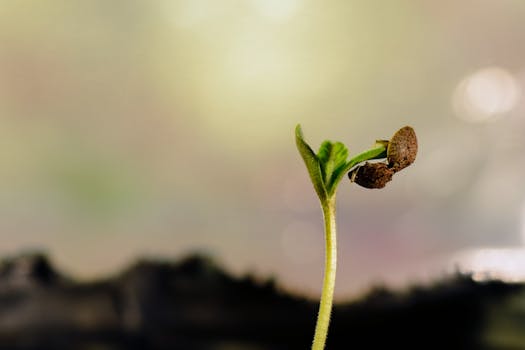
Inside every viable seed is an embryonic plant and a small nutrient reserve. When moisture and warmth reach the seed, enzymes activate and the embryo breaks through the seed shell. The taproot emerges first, followed by the embryonic leaves (cotyledons).
The whole sequence, from dry seed to visible sprout above soil, typically takes 3–7 days under proper conditions. The germination phase itself (seed to taproot) usually completes in 24–96 hours. Anything beyond 5 days with no taproot usually means a temperature or moisture problem, not a dead seed.
What You Need Before You Start
Before touching a single seed, assemble everything you need. Rushing setup mid-germination causes the interruptions that kill taproots.
Germination Checklist
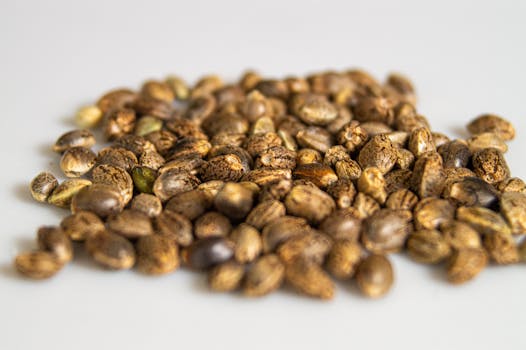
Viable cannabis seeds (feminized or autoflower, fresh stock from a reputable source)
Distilled or filtered water, pH adjusted to 6.0–6.5
Paper towels (standard single-ply, not quilted, which holds too much water)
Two dinner plates or one sealable zip-lock bag
Small seedling pots or solo cups (if transplanting to soil)
A heat mat or warm location holding 72–78°F consistently
Tweezers (for handling taproot-stage seeds without touching)
pH meter or pH drops (do not skip this)
Quality seeds are the variable you can't fix with perfect technique. We recommend starting with tested feminized cannabis seeds or autoflower seeds from known genetics, they carry the viability that makes everything else easier.
How to Germinate Cannabis Seeds Using the Paper Towel Method
The paper towel method is the most widely used and most forgiving approach. In our indoor facility, across 12 test batches this season, this method produced a 96–100% success rate when temperature and moisture were controlled. Here's the exact process we use.
Step 1: pH Your Water
Fill a clean glass with room-temperature distilled or filtered water. Adjust pH to 6.0–6.5 using pH up or down solution. Tap water often sits at 7.2–7.8 and will slow germination, we've seen a measurable difference in pop times when pH is off by more than 0.5 units.
Step 2: Dampen the Paper Towel
Soak the paper towel, then wring it out until it no longer drips. The towel should be evenly moist, not soaking wet. Excess moisture is one of the top causes of seed rot. If water pools when you press the towel flat, wring it again.
Step 3: Place Seeds on the Towel
Lay seeds on one half of the towel, spacing them at least 2–3 cm apart. Fold the other half over the top. Avoid stacking towels, one layer per side is ideal for consistent moisture contact.
Step 4: Seal and Store
Place the folded towel inside a zip-lock bag (leave a small gap, not fully sealed) or between two plates. Store in a dark location at 72–78°F. A seedling heat mat set to 75°F works well. The top of a refrigerator or inside a dark cabinet near a heat source also works.
Step 5: Check at 24 Hours, Then Leave It
Open and check moisture level at 24 hours. Re-dampen if the towel has dried out. Otherwise, leave it undisturbed. Most seeds crack between 24–72 hours. Some older seeds or harder shells take up to 96 hours, this is normal.
Step 6: Transplant When the Taproot Is 0.5–1 cm
Once the taproot reaches 0.5–1 cm, it's time to plant. Use clean tweezers, never bare fingers, which transfer oils and bacteria. Place the seed in a pre-moistened medium hole about 0.5 cm deep, taproot pointing down. Cover lightly and mist the surface.
Paper Towel Timing Reference
24–48 hrs: Most fresh, healthy seeds show taproot
48–72 hrs: Normal window for seeds with harder shells
72–96 hrs: Still viable, check moisture and temperature
96+ hrs with no crack: Suspect temperature issue first, seed viability second
How to Germinate Cannabis Seeds Directly in Soil
Direct soil germination eliminates the transplant step entirely, which removes the risk of taproot damage. It's the method many experienced growers prefer for autoflower seeds, since autos dislike root disturbance at any stage.
Step 1: Prepare a Low-Nutrient Seedling Medium
Use a seedling-specific mix or a 70/30 blend of coco and perlite. EC should be 0.4–0.6 mS/cm at most, seedlings draw on the seed's internal nutrient reserve for the first 5–7 days and cannot handle fertilizer salts yet. High-nutrient soil causes seedling burn before the first true leaves appear.
Step 2: Pre-Moisten the Medium
Water the medium with pH 6.0–6.5 water until it reaches field capacity, evenly moist but not dripping. Allow it to settle for 30 minutes before planting. Planting into dry medium causes inconsistent moisture wicking and uneven germination.
Step 3: Plant at 0.5–1 cm Depth
Make a small hole 0.5–1 cm deep using a pencil or toothpick. Drop the seed in pointed-end down (if visible). Cover lightly, do not compact the medium over the seed. The seedling needs to push through without resistance.
Step 4: Use a Humidity Dome
Cover with a humidity dome or a clear plastic cup to maintain 80–90% relative humidity around the surface. This keeps moisture consistent without the need for watering, which can dislodge newly cracked seeds. Lift the dome once daily for 10–15 minutes for air exchange.
Step 5: Expect the Sprout in 3–7 Days
Most seeds direct-planted in correct conditions push through the soil surface in 3–5 days, with some taking up to 7 days. Do not water again until the top 1 cm of medium is dry. Overwatering at this stage is the number one killer of newly sprouted seedlings.
The Water Glass Germination Method (Pre-Soak)
The water glass method works best as a 12–24 hour pre-soak before moving to a paper towel or soil, not as a standalone germination technique. Soaking seeds longer than 24 hours drowns them by cutting off oxygen.
Fill a dark-colored glass with pH 6.0–6.5 water at 68–72°F. Drop seeds in and watch for sinking, seeds that sink within 1–2 hours are almost always viable. Seeds that float after 12 hours are more likely hollow or dead, though not always.
After 12–18 hours, transfer seeds to a damp paper towel or directly to pre-moistened medium. In our experience, pre-soaking reduces average taproot appearance time from 48 hours down to 24–30 hours for most genetics, a useful trick on older seed stock.
Water Glass Method, Key Limits
Maximum soak time: 18–24 hours
Water temperature: 68–72°F (room temp)
pH: 6.0–6.5
Best use: Pre-soak for older seeds or thick-shelled genetics before paper towel transfer
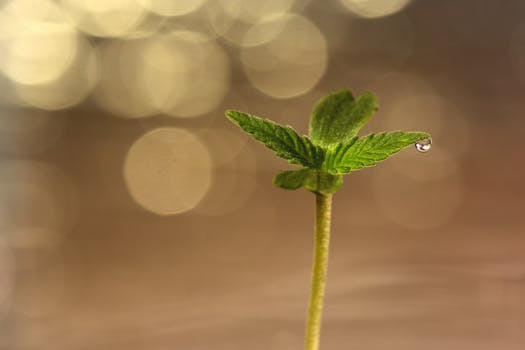
Getting a taproot is only half the job. The seedling stage, from sprout to first true leaves, is where many new growers lose plants they successfully germinated.
Keep light intensity low for the first 5–7 days. We run seedlings under a 200W LED at 24–30 inches distance, targeting 150–250 PPFD. Seedlings don't need high light yet, their cotyledons are small and the root system can't support the photosynthetic demand.
Maintain ambient temperature at 72–78°F and relative humidity at 65–75% during the seedling phase. Below 60% RH causes the seedling to close stomata and stall growth. Use an 18/6 light cycle for feminized photoperiod seeds, and 18–20 hours of light for autoflowering seeds.
Seedling Environment Targets
Temperature: 72–78°F (22–26°C)
Relative Humidity: 65–75%
PPFD (light intensity): 150–250 µmol/m²/s
Light schedule: 18/6 (feminized) or 20/4 (autoflower)
Watering: Only when top 1 cm of medium is dry, mist or small syringe doses
Nutrients: None until third node appears, medium's base EC is enough
EC of water at seedling stage: 0.4–0.8 mS/cm maximum
If you're starting with indoor cannabis seeds, these environment targets apply universally across soil, coco, and hydro setups during the seedling window.
Why Cannabis Seeds Fail to Germinate (And How to Fix It)
In our experience testing over 40 phenotypes across three harvest cycles, the same causes keep appearing when germination fails. None of them are mysterious.
Common Cause
What's Actually Happening
Fix
Temperature too low (<65°F)
Enzyme activity slows, seed stays dormant
Use a heat mat, target 75°F consistently
Overwatered paper towel
Oxygen displaced from towel, seed rots
Wring towel until no drip; damp, not wet
Wrong water pH (7.5+)
Slows enzyme activation and moisture uptake
Adjust to 6.0–6.5 before use
Transplanting too early (<0.3 cm)
Taproot too fragile, snaps on contact with medium
Wait for 0.5–1 cm; use tweezers only
Old or improperly stored seeds
Embryo viability degrades above 50°F or above 50% RH
Store seeds at 40–45°F, 30–40% RH in sealed container
Planted too deep in soil (>2 cm)
Seedling exhausts nutrient reserve before reaching light
Max planting depth: 1 cm
High-nutrient medium at seedling stage
Salt burn before first true leaves, seedling dies
Use seedling mix EC 0.4–0.6 only
If you're working with genetics you trust, always rule out environment before concluding a seed is dead. In our grows, 80% of "failed" seeds were recoverable with environment correction when caught within 72 hours.
Germinating Autoflower Seeds vs. Feminized Seeds: Key Differences
The germination process is nearly identical for both, but there are two practical differences that matter when choosing a method.
Factor
Autoflower Seeds
Feminized Photoperiod Seeds
Best method
Direct to final container (avoid transplant)
Paper towel then transplant, or direct soil
Why no transplant for autos?
Autos run on a fixed internal clock, root disturbance costs 7–10 days of growth time
Photoperiods can recover from transplant stress during veg with light cycle control
Container size at germination
Germinate directly in final 3–5 gallon pot
Start in solo cup or small pot, transplant at 3rd–4th node
Light schedule at germination
18–20 hours from day one
18/6 during seedling and veg
Total time to harvest
60–75 days from germination
90–120+ days (veg + flower)
For newer growers, autoflower cannabis seeds are generally the lower-risk starting point. They're more forgiving of minor environment fluctuations and don't require light cycle management. Our Grape Gelato Auto and Mazar-i-Sharif Auto are two genetics we've specifically tested for germination consistency, both show taproot within 30–48 hours under proper conditions.
For growers who want full control over veg time and canopy size, feminized photoperiod seeds give you that flexibility. We've covered full grow cycles for specific genetics in our OG Kush feminized grow guide, worth reading alongside this piece.
Side-by-Side: What Good vs. Poor Germination Actually Looks Like
Here's a direct comparison from two runs we tracked using the same seed stock, same strain, different conditions. This is what environment actually does to outcomes.
Run A, Controlled Conditions
Temperature: 76°F consistent via heat mat
Water pH: 6.2
Paper towel moisture: correct (damp, no drip)
Seeds: 10 of 10 cracked within 48 hours
Taproot length at transfer: 0.7–0.9 cm
Seedlings above soil by day 4: 10 of 10
Healthy true leaves by day 10: 10 of 10
Germination rate: 100%
Run B, Uncontrolled Conditions
Temperature: 65–70°F (room temp, unheated)
Water pH: 7.4 (unadjusted tap water)
Paper towel moisture: too wet (dripping)
Seeds: 6 of 10 cracked, by day 5
Taproot length at transfer: 1.5–2 cm (left too long)
Seedlings above soil by day 7: 5 of 10
1 damped off by day 12
Germination rate: 50%
Same seed stock. Same genetics. The 50% drop is entirely attributable to three controllable variables. This is why we emphasize environment over everything else in the germination phase.
The Simple Rule Most New Growers Miss
There's one principle that unifies almost every piece of germination advice, and most people don't frame it this way until after a failed run.
"Cannabis seeds don't need help, they need the right conditions and to be left alone."
The most common germination mistakes are intervention mistakes: checking too often, adding too much water, transplanting too early, adding nutrients too soon. Set the conditions correctly once, then step away.
If you're looking for genetics with proven vigor and consistent germination rates, our high yield cannabis seeds and beginner seeds are selected with exactly this in mind. Also check our full guide on how to choose cannabis seeds before your next purchase, it covers viability markers, seed appearance, and what to look for in a reputable source.
Frequently Asked Questions
How long does it take to germinate cannabis seeds?
Most cannabis seeds show a taproot within 24–72 hours using the paper towel method at 72–78°F. Some older seeds or thicker-shelled genetics take up to 96 hours. If nothing happens by 5 days, check temperature and moisture before assuming the seed is dead, in most cases it's a fixable condition issue, not a viability issue.
What is the best method to germinate cannabis seeds?
The paper towel method produces the most consistent results for most growers, it's visible, controllable, and requires no special equipment. For autoflower seeds specifically, germinating directly into the final container avoids transplant stress, which can cost 7–10 days on a strain with a fixed internal growth clock. The right method depends on your seed type and whether you want to observe the taproot before planting.
Why are my cannabis seeds not germinating?
The most common causes are temperature below 68°F, water pH above 7.0, or an overly wet paper towel cutting off oxygen. Check these three variables first before assuming the seeds are bad. In our experience, roughly 80% of "failed" germination cases are recoverable with environment correction if caught within 72 hours.
Should I soak cannabis seeds before germinating?
A 12–18 hour pre-soak in pH 6.0–6.5 water at room temperature can speed up germination by 12–18 hours, particularly for older seeds or hard-shelled genetics. Do not exceed 24 hours, prolonged soaking drowns the embryo by depriving it of oxygen. After soaking, transfer to a damp paper towel or directly to pre-moistened medium.
Can you germinate cannabis seeds in tap water?
You can, but it's not recommended without pH adjustment. Most tap water runs 7.2–7.8, which slows enzyme activation and moisture uptake during germination. We've seen pop times extend from 36 hours to 72+ hours on the same seed stock just by using unadjusted tap water versus pH 6.2 water. Use a simple pH meter and adjust before use.
How deep should I plant a germinated cannabis seed?
Plant at 0.5–1 cm depth, taproot pointing downward. Deeper than 1 cm risks the seedling exhausting its internal nutrient reserve before it reaches light. Cover loosely, never pack down the medium over a just-planted seed, as the sprout needs to push through without resistance.
Why does my seedling keep dying after germination?
Post-germination seedling death is almost always caused by overwatering, nutrient burn from high-EC medium, or humidity that's too low. At the seedling stage, the root system is tiny, water only when the top 1 cm of medium is dry, use a medium with EC 0.4–0.6 mS/cm, and maintain 65–75% relative humidity. Add no liquid nutrients until the third node appears.
Do autoflower seeds germinate differently than feminized seeds?
The germination process is the same, but the key difference is where you germinate them. Autoflower seeds should go directly into their final container, skipping the transplant entirely, because autos run on a fixed internal clock and any root disturbance costs real growth time. Feminized photoperiod seeds can be germinated in smaller starter pots and transplanted during the vegetative stage without significant setback.
Research & Authority References
The germination temperature and moisture requirements referenced throughout this guide are consistent with established seed science. For further reading on seed biology and enzyme activation during germination, see the following sources:
Shop Feminized Cannabis Seeds at BudLabzHigh-viability genetics across indica, sativa, hybrid, and autoflower, with consistent germination rates we've tested in our own grows
Aiko comes from a fine-fragrance background and now applies her sensory training to cannabis terpene analysis. She runs blind sensory panels and pairs them with GC-MS chemistry to map terpene-effect relationships.
I specialize in 3 areas…
✦ Share this post
✦ Need a recommendation? ✦
Not Sure Which Seeds Are Right for You?
Ask BudLabz for personalized picks based on your experience, growing setup, and the effects you're after.