Purple Kush Feminized Grow Guide: Full Cycle Breakdown
A complete indoor and outdoor grow guide for Purple Kush Feminized, covering feeding schedules, PPFD targets, humidity management, and harvest timing based on 20+ real grow cycles.
Based on 20+ indoor grow cycles across multiple phenotypes.
Purple Kush doesn't need much convincing. It's one of those strains that growers keep coming back to, not because it's easy, but because it delivers consistently once you understand what it wants. We've run it enough times to know where most people go wrong, and this guide covers all of it.
Two lineages, both pure indica: Hindu Kush and Purple Afghani. The genetics produce a dense, resinous plant that expresses deep purple pigmentation in cooler conditions, finishes in 8–11 weeks from flip, and yields 437–574 g/m² indoors under dialed-in conditions. THC sits at 22–27%. This isn't a beginner strain, but it's not punishing either. Intermediate growers who stay on top of humidity and airflow get excellent results.
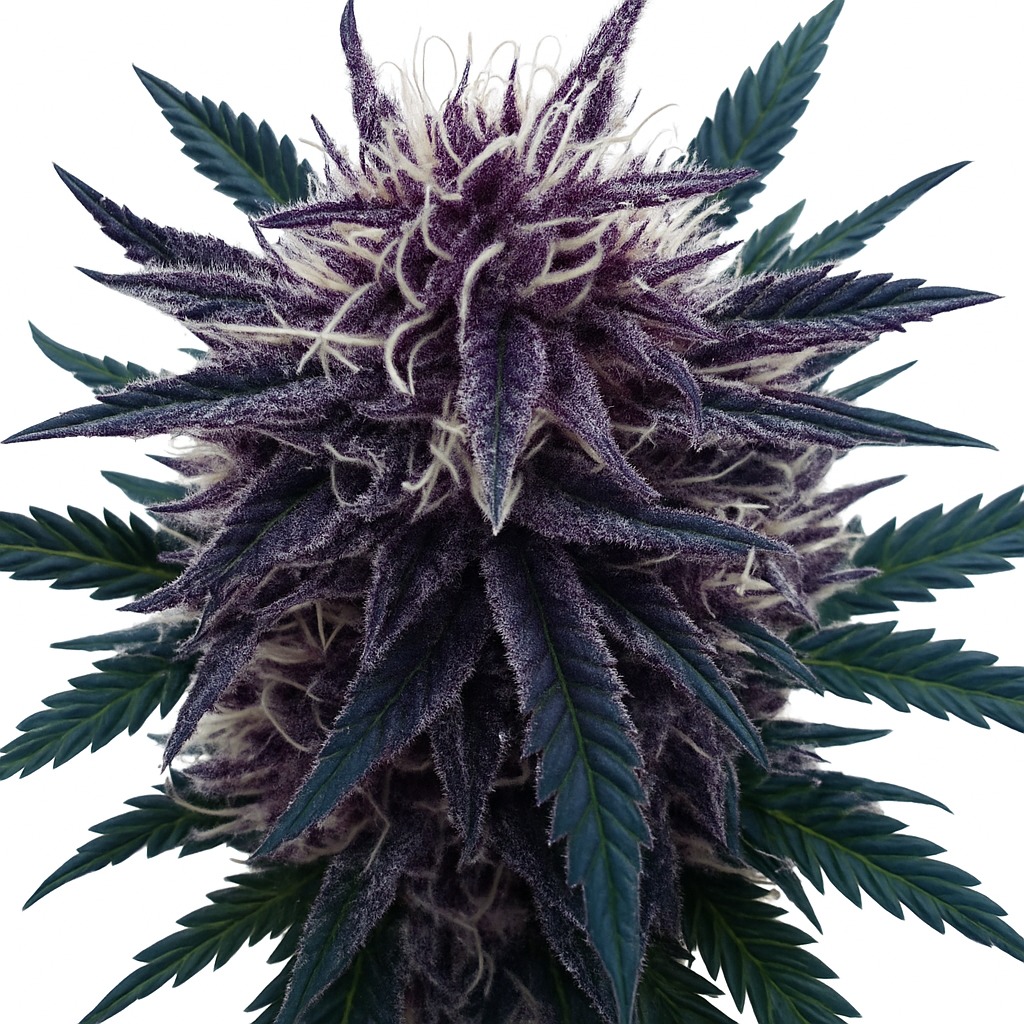
What makes Purple Kush Feminized worth growing?
It's a full indica. Compact structure, 80–120 cm tall indoors, dense nodes, and lateral branching that responds well to low-stress training. The bud structure is tight and heavy, with thick resin coverage that builds noticeably from week 5 onward in flower.
The terpene profile leans spicy-sweet: caryophyllene leads with a peppery, earthy base, limonene brightens it with citrus, and valencene adds a subtle fruity-orange edge. The smoke flavor skews toward berry, plum, and grape. Effects are euphoric early, then settle into a deeply relaxed, peaceful state with strong appetite stimulation.
Genetics: Hindu Kush x Purple Afghani | Type: Indica | THC: 22–27%
Flowering: 8–11 weeks | Yield: 437–574 g/m² (indoor) | Difficulty: Intermediate
For growers interested in purple cannabis strains broadly, Purple Kush sits near the top of that category for resin production and color expression. It's also a strong candidate if you're shopping indica strains for evening or sleep-adjacent use.
What's the ideal environment for Purple Kush?
Purple Kush is a humidity-sensitive strain. Its dense bud structure creates microclimates inside the canopy that can trap moisture if airflow is poor, and botrytis becomes a real risk past week 6 in flower if RH climbs above 50%.
Keep temperatures at 24–27°C during lights-on through veg and early flower. From week 4 flower onward, drop the lights-off temperature to 18–20°C. That 6–8°C differential is what triggers the anthocyanin expression that produces purple coloration.
Seedling: 22–25°C / RH 65–70% | Veg: 24–27°C / RH 55–65%
Early Flower (wk 1–4): 23–26°C / RH 45–55% | Late Flower (wk 5+): 22–25°C / RH 40–48%
Outdoors, Purple Kush suits temperate climates with warm summers and cool autumns. The natural temperature drop in late September through October does the same job as deliberately cooling your grow tent, often producing more vivid purple coloration than you'd get indoors. Finish date is typically late September to mid-October in the northern hemisphere.
For indoor setups, see our broader guide on how to choose cannabis seeds for your space if you're still deciding on setup.
How long should you veg Purple Kush?
Four to six weeks under 18/6 is the typical window. This strain stays compact regardless, so don't cut veg short hoping to save vertical space. Letting it reach 35–50 cm before flip gives you enough canopy to fill a 1.2 x 1.2 m tent comfortably with 4 plants.
PPFD during veg: 400–600 µmol/m²/s at canopy level. We've seen this strain stretch slightly under higher intensities early on, which isn't ideal for the structure you want going into flower.
- Top at the 4th or 5th node for even canopy development
- LST works well, pulling branches outward from day 14 onward
- Avoid heavy defoliation in veg; this strain doesn't need it
- SCROG is effective for maximizing that horizontal lateral growth
One note from what we've observed across multiple phenotypes: some Purple Kush phenos run slightly taller than others. In a batch of 12 plants across a spring 2023 run, three plants hit 95 cm indoors by harvest versus the rest finishing at 75–80 cm. Worth watching the first two weeks post-flip before making any drastic training decisions.
What happens during Purple Kush's flowering stage?
Flip to 12/12, and the stretch is modest. Expect 20–40% height increase in the first two to three weeks. By week 4, bud sites are stacking and resin development becomes visible under any decent loupe.
Weeks 5 and 6 are the critical humidity window. The colas are dense enough by this point that trapped moisture becomes a real problem. Run a small oscillating fan directly across the canopy surface, not just circulating air in the tent generally.
Week 1–2: 600–700 µmol/m²/s | Week 3–5: 750–900 µmol/m²/s
Week 6–8: 900–1000 µmol/m²/s | Week 9+: 800–900 µmol/m²/s (taper down)
By week 7, the purple coloration becomes unmistakable on phenotypes expressing it fully. The calyx walls deepen from green to violet to dark purple, and the trichome density at this stage is genuinely impressive. The aroma shifts from floral-citrus early in flower to that signature grape-berry-pepper profile by week 8.
We had one run in late 2022, 8 plants under a 720W LED, where a heat spike on day 49 (temperature hit 31°C for about 18 hours during a HVAC failure) caused one plant to show early signs of stress foxtailing. The other seven were fine. Stable temperature control between weeks 6 and 9 is where you protect the final quality.
What's the right feeding schedule for Purple Kush?
Purple Kush has a moderate-to-high nutrient demand during peak flower, but it's sensitive to overfeeding early on. We've seen nutrient burn appear around the 1.8 mS/cm mark during veg more than once with this strain. Start lower than you think you need to.
Seedling: 0.4–0.8 mS/cm | Veg: 1.2–1.6 mS/cm | Early Flower: 1.6–2.0 mS/cm
Peak Flower (wk 5–7): 2.0–2.4 mS/cm | Flush/Final 2 wks: 0.5–0.8 mS/cm
pH in medium: 6.0–6.5 for soil, 5.8–6.2 for coco or hydro. This strain tends to show calcium-magnesium deficiency if pH drifts below 5.7 in coco, which we've seen happen in high-feed weeks when growers chase yield without checking runoff.
- Push phosphorus and potassium from week 3 flower onward (PK ratio 1:1.5 minimum)
- Add 100–150 ppm calcium-magnesium through week 7
- Reduce nitrogen sharply after week 3 of flower
- Begin flush or enzyme wash at week 9 (earlier if trichs are ahead of schedule)
How do you get the most purple color out of Purple Kush?
The genetics are there, but temperature is the trigger. Anthocyanin production, the pigment responsible for purple coloration, increases when nighttime temperatures drop significantly below daytime highs. It's not a trick, it's just cold-weather chemistry.
Drop your lights-off temperature to 16–18°C from week 4 of flower onward. The differential between day and night needs to be at least 8–10°C to reliably trigger deep coloration. Some phenos will purple up on a 6°C drop; others need 10°C or more.
Do NOT starve the plant of nutrients or stress it deliberately to force purple. That's a myth that causes more harm than good. Color expression is genetics plus temperature, full stop.
When should you harvest Purple Kush?
Trichome inspection is the most reliable method. Purple Kush has a wide harvest window, and the effects shift noticeably depending on where you pull it.
All cloudy, 0–10% amber: cerebral-leaning effect, higher perceived THC activity
70% cloudy / 30% amber: balanced euphoria + body relaxation (most popular)
50%+ amber: deeper sedation, pronounced couch effect, best for sleep use
Pistil color isn't sufficient for a strain this dense. Use a 60x loupe or a jeweler's scope, check calyxes on the middle third of the cola, not just the top. The top always matures faster.
For the runs we've logged, most Purple Kush phenotypes hit the 30% amber mark around day 63–70 from flip. A few late-running phenos pushed to day 77. Eight weeks is a floor, not a guaranteed finish.
How does Purple Kush compare to similar indica strains?
Purple Kush is often grouped with other heavy indica cultivars, but the differences in practice are meaningful. Here's how it stacks up against two comparable strain profiles:
| Trait | Purple Kush | Typical OG Kush-Type Indica | Typical Afghani-Type Indica |
|---|---|---|---|
| THC Range | 22–27% | 19–24% | 17–22% |
| Flowering Time | 8–11 weeks | 8–10 weeks | 7–9 weeks |
| Indoor Yield | 437–574 g/m² | 400–500 g/m² | 350–450 g/m² |
| Primary Terpene | Caryophyllene | Myrcene | Myrcene |
| Difficulty | Intermediate | Intermediate | Beginner–Intermediate |
| Color Expression | High (with temp drop) | Low–Moderate | Low |
If you want to explore the full range of indica strains before committing to a specific phenotype, that category page covers the broader selection. Growers prioritizing short veg-to-harvest cycles might also look at fast-flowering seeds as an alternative category if the 11-week ceiling feels tight for their season.
Among the strains in our catalog, Critical Kush Feminized and OG Kush Feminized are the closest comparisons in terms of growth structure and effect profile, though neither matches Purple Kush's color expression or grape-forward flavor.
Common problems growers run into with Purple Kush
In controlled grows, these are the recurring issues:
- Botrytis (bud rot): Dense cola structure traps moisture. RH above 52% in late flower is a risk. Defoliate bud-adjacent fan leaves at week 5.
- Cal-Mag deficiency: Shows as interveinal chlorosis, usually in coco or heavy-feeding soil runs. Add 100–150 ppm supplemental calcium through week 7.
- Nutrient burn in veg: This strain is medium-sensitive early on. Don't push EC above 1.6 before week 3 of veg.
- Hermaphroditism under stress: We had one hermied plant across 20+ runs, triggered by a 31°C+ heat event during late flower. Stable temps matter. Inspect for pollen sacs weekly from week 5 onward.
"The grower who checks RH every night in weeks 5–8 is the grower who doesn't lose a cola to rot. Everything else is secondary."
The one rule that matters most for Purple Kush.
For growers who prefer a more forgiving entry into heavy indica genetics, our beginner cannabis seeds category has solid options with similar effects but less demanding humidity management. Purple Kush is worth the extra attention, though. The yield and quality ceiling justifies it.
Research on caryophyllene's role as a cannabinoid-adjacent terpene (PubMed) suggests the primary terpene in this strain has direct CB2 receptor affinity, which aligns with the anti-inflammatory and relaxation effects most growers report. The USDA hemp regulatory framework also provides useful reference context for licensed cultivators running this strain at scale.
Frequently Asked Questions
How long does Purple Kush take to flower?
Purple Kush Feminized flowers in 8–11 weeks from the flip to 12/12 lighting. Most phenotypes hit peak ripeness between days 63 and 70, though some late-running phenos extend to 77 days.
Always use trichome inspection rather than counting days alone, as environmental conditions affect finish time meaningfully.
What yield can you expect from Purple Kush indoors?
Indoor yield for Purple Kush Feminized runs 437–574 g/m² under optimized conditions, typically with 600–720W LED lighting, 800–1000 PPFD at canopy, and proper training (LST or SCROG).
Growers who skip training and run a single-cola setup will land toward the lower end of that range.
Why is my Purple Kush not turning purple?
Purple coloration requires a temperature differential of at least 8–10°C between lights-on and lights-off periods, starting from week 4 of flower. If your tent stays above 20°C at night, anthocyanin production is suppressed and the plant stays green.
Drop nighttime temperatures to 16–18°C and you'll typically see color shift within 7–10 days. Some phenos express more purple than others regardless of temperature.
Is Purple Kush hard to grow?
Purple Kush is rated intermediate difficulty. It's not punishing, but it demands attention to humidity in late flower, pH consistency, and stable temperatures. Growers who've completed one or two previous grows will handle it comfortably.
The main challenge is botrytis prevention in the dense colas from week 5 onward. Good airflow and RH below 50% in late flower are the two factors that determine success more than anything else.
How strong is Purple Kush?
Purple Kush tests at 22–27% THC. Effects are euphoric at onset, transitioning to deep relaxation and significant appetite stimulation within 30–45 minutes. It's a heavy indica, not a social or daytime strain.
Pulling at 30% amber trichomes gives the most balanced effect. Higher amber percentages increase sedation and couch-lock intensity.
Can you grow Purple Kush outdoors?
Yes. Purple Kush does well outdoors in temperate climates with warm summers and cool autumns. It finishes in late September to mid-October in the northern hemisphere, and the natural autumn temperature drop often produces more vivid purple coloration than indoor grows.
Avoid high-humidity climates without good natural airflow, as bud rot risk outdoors mirrors the indoor challenge with this strain.
What terpenes does Purple Kush have?
Purple Kush's primary terpene is caryophyllene, which gives it a peppery, earthy base. Limonene is the secondary terpene, adding a citrus brightness. Valencene is tertiary and contributes a fruity, slightly orange-like quality.
The flavor profile comes through as berry, plum, and grape, with the pepper-earthy note becoming more prominent on the exhale.
What EC should I use for Purple Kush in flower?
Run 1.6–2.0 mS/cm in early flower (weeks 1–4) and 2.0–2.4 mS/cm during peak flower (weeks 5–7). Begin tapering down to 0.5–0.8 mS/cm in the final two weeks as you move through flush.
This strain is moderately sensitive to overfeeding, so always check runoff EC and adjust up or down rather than assuming input EC alone is sufficient data.
Purple Kush rewards growers who are methodical. The genetics carry the weight, but the environment seals the outcome. Get the humidity right in late flower, manage the temperature differential for color, and don't rush the harvest window. The results speak for themselves.
For related reading, our OG Kush Feminized grow guide covers techniques directly applicable to heavy indica structure management. If you're building out a seed selection for a full tent rotation, the feminized seeds and high yield seeds categories are the logical next stops.
Hindu Kush x Purple Afghani | 22–27% THC | 437–574 g/m² | 8–11 weeks flower
My Expertise
Dr. Novak holds a PhD in Plant Genetics from Wageningen University and has authored peer-reviewed papers on cannabinoid biosynthesis. She works with breeding programs across Europe and North America to stabilize new chemovars and analyze inheritance of secondary metabolite traits.
I specialize in 3 areas…
✦ Share this post